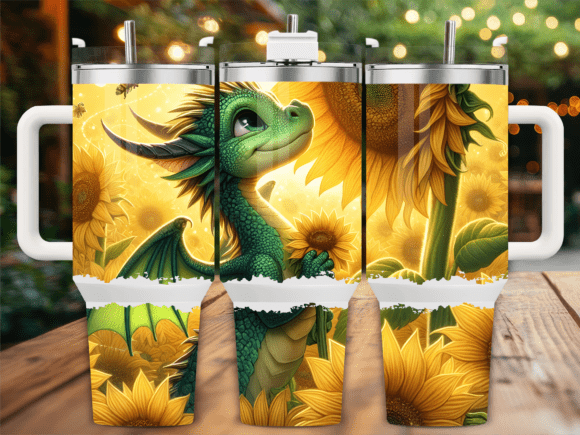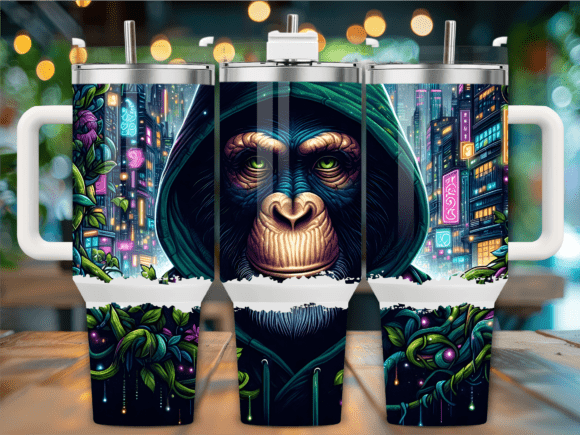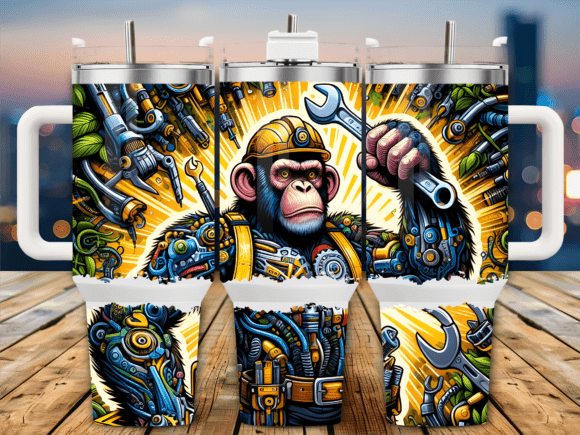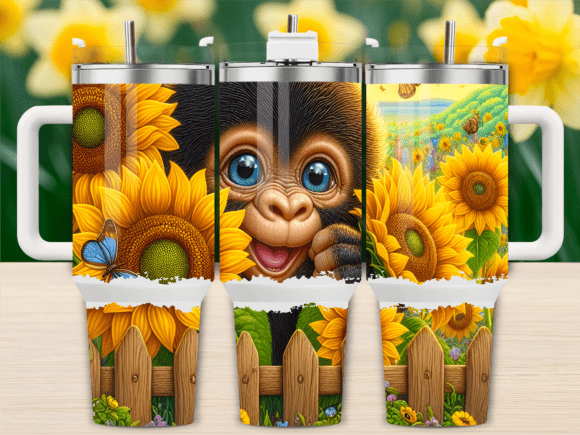
Cute Gorilla in Sunflowers 40oz Tumbler
When I first opened the Cute Gorilla in Sunflowers 40oz Tumbler design files, I was curious how a tumbler graphic would translate into the embroidery world. As someone who both digitizes and stitches custom apparel for clients, I have learned to look beyond the file name and ask the real questions: Will this hold up on fabric? Will customers love the finished piece? Is this something I can build a product around? After spending time with these files, I can say this design carries genuine potential for several embroidery applications, especially if you are willing to adapt it thoughtfully.
A Design with Unexpected Warmth
The visual personality of Cute Gorilla in Sunflowers 40oz Tumbler strikes a balance between playful and approachable. The gorilla is rendered with a soft, friendly expression, and the sunflowers add a cheerful, almost whimsical backdrop. This is not a hyper-realistic wildlife portrait, nor is it a cartoon. It lands somewhere in the middle, which makes it surprisingly versatile for both children's items and adult gifts. The mood feels warm, handmade, and slightly nostalgic, like something you might find at a summer craft fair or a boutique that specializes in personalized gifts. For an embroidery designer, this kind of visual personality opens doors to projects that need character without being overpowering.
The layout, as provided in the three PNG parts, is built for a 40oz tumbler surface, but the composition itself translates well to flat fabric surfaces too. The top section measures 12.5 by 5.8 inches straight, and the bottom sections come in straight and tapered versions. That tapered piece tells me someone thought about how the design wraps around a curved surface. For embroidery, that same logic applies when you are working on a cap, a tote bag side panel, or a sweatshirt front. The design has a vertical flow that feels natural and balanced.
Real Project Application: A Custom Sweatshirt for a Small Shop
Let me walk you through how I tested Cute Gorilla in Sunflowers 40oz Tumbler in a real scenario. A local boutique owner approached me about a limited run of fall-themed sweatshirts for her shop. She wanted something that felt cozy but not overly seasonal, and she loved the idea of an animal surrounded by flowers. I suggested adapting the tumbler design into an embroidered front centerpiece on a cream-colored crewneck sweatshirt.
I pulled the PNG files into my digitizing software and traced the key elements, converting the gorilla and sunflower shapes into satin stitches and fill stitches. The original design has a good amount of open space between the sunflowers and the gorilla's face, which helped keep stitch density manageable. I used a medium-weight cutaway stabilizer and a 5x7 hoop. The top section of the design fit neatly across the chest area. I stitched a test version on cotton twill first, then moved to the actual sweatshirt fabric. The result was clean, readable, and had a nice tactile quality. The boutique owner sold out of all twelve pieces in two weekends. That is the kind of real-world performance that matters when you are running a craft business or selling to Etsy customers.
Where This Design Shines in Embroidery Projects
Based on my testing, Cute Gorilla in Sunflowers 40oz Tumbler works well for several product categories. Here are the applications where I saw the strongest results:
- Custom apparel: Sweatshirts, t-shirts, and hoodies are natural fits. The design sits well on the front chest or center back. Use a 5x7 hoop or larger depending on which section you choose.
- Tote bags: The straight top section works beautifully on a canvas tote. The sunflowers add color without overwhelming the bag shape.
- Embroidered patches: You can isolate the gorilla and one sunflower to create a small patch for caps or jackets. The fill stitch areas are dense enough to hold shape without puckering.
- Baby and kids items: The cute expression makes it appropriate for bibs, onesies, or small blankets. Just scale it down and check your stitch density for delicate fabrics.
- Holiday and gift products: This design has a natural gift appeal. I have seen similar styles sell well as personalized gifts for birthdays, baby showers, and even housewarming presents.
- Home decor: Pillow covers and tea towels embroidered with this design add a handmade touch that customers appreciate. The sunflower theme fits spring and summer decor but can also work year-round with the right color palette.
If you sell digital products or printable mockups, the Graphics format of these files means you can also use the PNGs directly for listing photos, pattern previews, or social media posts. The design has enough visual interest to stop a scroll, which is valuable for Etsy sellers and small shop owners.
Where to Use with Care
No design is perfect for every surface, and Cute Gorilla in Sunflowers 40oz Tumbler has a few limitations worth noting. First, the detail level in the gorilla's face and the sunflower petals requires a stable fabric base. Thin or stretchy materials like lightweight jersey or slippery polyester may cause registration issues. If you want to use this on t-shirts, add a layer of tear-away stabilizer on top and a cut-away underneath. Test on scrap fabric first, especially if you are new to digitizing or converting PNG to embroidery.
Second, the tapered bottom section is designed for curved tumbler surfaces. If you adapt it for a flat embroidery project, be aware that the curve may look slightly distorted on a flat plane. You might need to adjust the underlay or reposition the elements to sit naturally on a flat garment. I recommend stitching a test version on scrap fabric before committing to a client order.
Third, dark fabric colors will affect how the sunflowers read. The original design likely assumes a lighter or neutral background. If you stitch this on a dark sweatshirt, consider using a white or bright yellow underlay for the sunflower petals to maintain contrast. Thread color selection matters more here than with simpler designs. Take the time to review your thread palette against the fabric color before digitizing.
Finally, small hoop sizes may not accommodate the full design. If you are using a 4x4 hoop, you will likely need to stitch only a portion of the design, such as the gorilla face alone. The full composition requires at least a 5x7 hoop, and ideally a larger one for the top section.
Visual Appeal and Customer Trust
In my experience, customers respond to embroidery that feels intentional and well-crafted. Cute Gorilla in Sunflowers 40oz Tumbler has a friendly, approachable look that translates into trust. When a buyer sees a gorilla surrounded by sunflowers on a tote bag or sweatshirt, they perceive effort and creativity. That perception raises the perceived value of your finished product. For handmade shop owners and craft business operators, that kind of recognition is gold. It justifies a higher price point and encourages repeat purchases.
The design also works well for brand consistency if you build a product line around nature themes or animal motifs. The sunflower element is strong enough to become a signature accent across multiple items. I have seen similar designs help small shops create a cohesive look that customers remember at craft fairs and online marketplaces.
Practical Notes Before You Stitch
Here are the steps I recommend before you commit Cute Gorilla in Sunflowers 40oz Tumbler to a production run. These are based on my own testing and mistakes I have made with similar converted designs:
- Test on scrap fabric first. Always. Use the same fabric type you plan to use for the final product. Check tension, thread breaks, and fabric distortion.
- Review stitch density. If you are converting the PNG to an embroidery file, watch for areas that may become too dense. Sunflower petals with multiple layers can cause thread buildup. Adjust your digitizing settings to keep density under control.
- Check thread color contrast. Place your chosen thread colors next to the fabric. Look at them in natural light and under shop lighting. What looks good on screen may look flat on fabric.
- Test in black and white mockups. Print a grayscale version of the design. This helps you see contrast issues without color distraction. If the gorilla blends into the background in grayscale, you need more separation.
- Confirm hoop size. Measure your hoop against the top section dimensions, which are 12.5 by 5.8 inches. If your hoop cannot accommodate that, plan to stitch a smaller portion or scale the design down.
- Use proper stabilizer. For medium-weight fabrics, a cut-away stabilizer is my go-to. For lightweight fabrics, add a layer of tear-away on top to prevent the nap from swallowing the stitches.
- Check licensing. Since these files are listed under Freebies, confirm whether commercial use is allowed before selling finished items or digital products. When in doubt, contact the designer directly.
- Inspect small details. The gorilla's eyes and mouth are small but important. If your machine struggles with fine details, consider simplifying those areas or enlarging the design slightly.
These steps may sound basic, but I have seen too many crafters skip them and end up with puckered fabric, broken needles, or unhappy customers. Taking twenty minutes to test saves hours of frustration later.
Final Thoughts on the Design's Real-World Value
Cute Gorilla in Sunflowers 40oz Tumbler is more than just a tumbler graphic. For embroidery designers, small business owners, and handmade product sellers, it represents a versatile design asset that can be adapted into multiple product lines. The mood is warm and inviting. The layout has practical structure. The sunflowers provide color and contrast. The gorilla adds character and emotional appeal. When used with care, this design can elevate a simple sweatshirt, tote bag, or pillow cover into a memorable finished product that customers want to buy and keep.
If you are an Etsy seller looking for your next bestseller, or a hobbyist wanting to stitch something special for a friend, I recommend giving this design a try. Just remember to test, adjust, and think through your fabric and thread choices. The effort you put into preparation will show in every stitch. That is the difference between a product that sells once and a product that builds a loyal following.